The HUBU Team IDENTITY ARCHITECTS

The HUBU Identity & Mindset Report

Who Is Your Teenager Becoming?

Because preparing teenagers for the future begins with helping them understand who they are today.

Every teenager is becoming someone. Their experiences, beliefs, values, choices and habits are gradually shaping who they become. But how much of that development is intentional?

The HUBU Identity & Mindset Report helps teenagers explore who they are, discover their strengths, understand what influences their choices and become more intentional about who they want to become.

For parents, it offers something equally valuable: an opportunity to better understand the young person behind the grades, behaviour and everyday decisions.

Understand Yourself. Discover Your Strengths. Grow With Intention.

Executive Summary — ₦7,500  |  Full Report — ₦12,500

Already have a report? Download the parents’ guide to understanding it (PDF) ↓

For schools and institutional enquiries: Explore HUBU for Schools →

Illustration of a tree with deep roots and golden leaves

01

Beyond Grades: Understanding Who Your Teenager Is Becoming

Academic results tell us how teenagers are performing. They do not tell us everything about who they are becoming.

Behind every grade is a young person developing a sense of identity, forming beliefs, discovering values and making choices that influence their future. Family, friends, social media and everyday experiences all contribute to that development—sometimes without conscious reflection.

The HUBU Identity & Mindset Assessment creates an opportunity for teenagers to explore these influences, recognise their strengths and take greater ownership of their personal growth.

Because success is not only about what teenagers achieve, but also about the people they become.

02

Five Dimensions. One Important Question: Who Are You Becoming?

The HUBU assessment explores five interconnected dimensions of personal development.

    Together, these dimensions help teenagers reflect on where they are today and how they can become more intentional about their development.

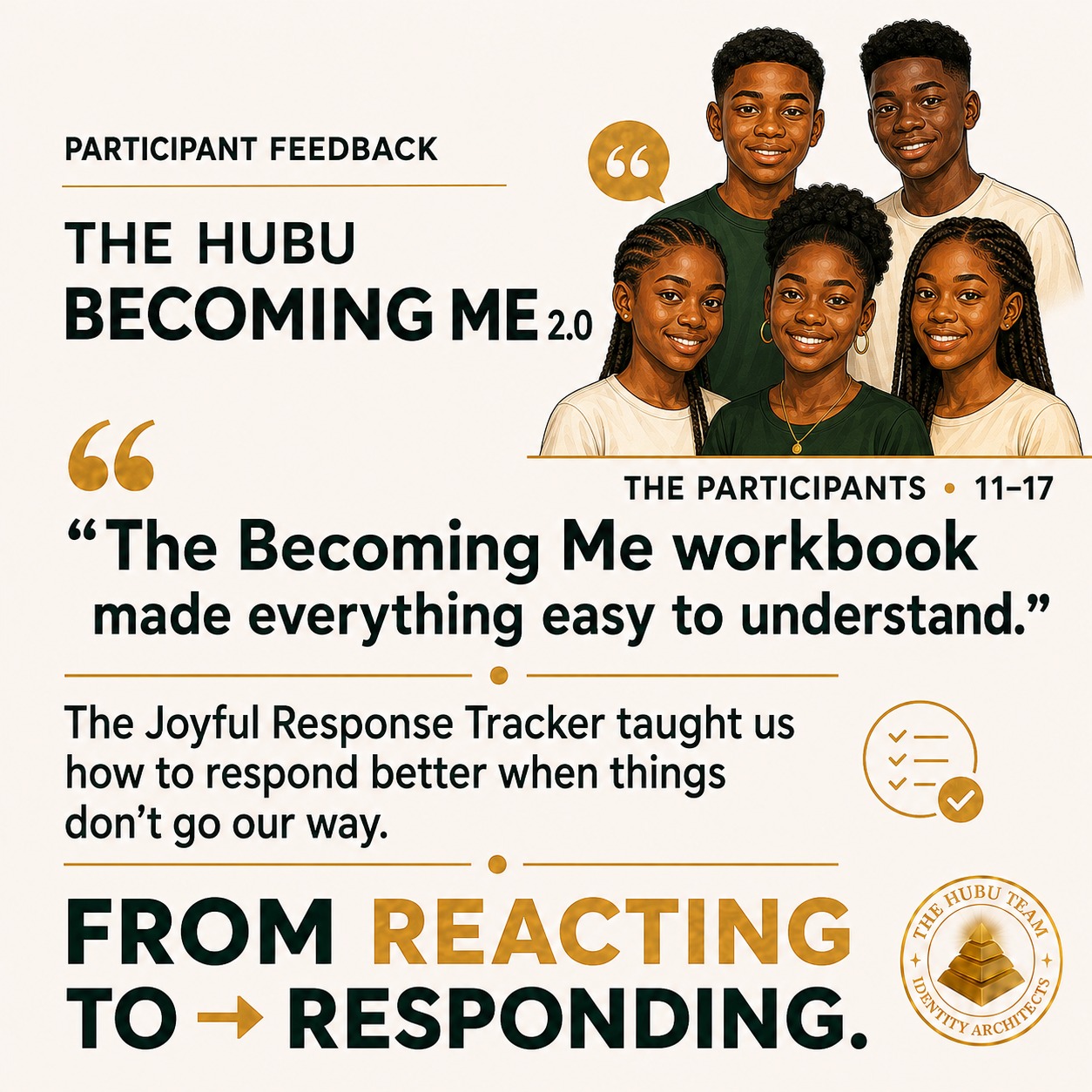
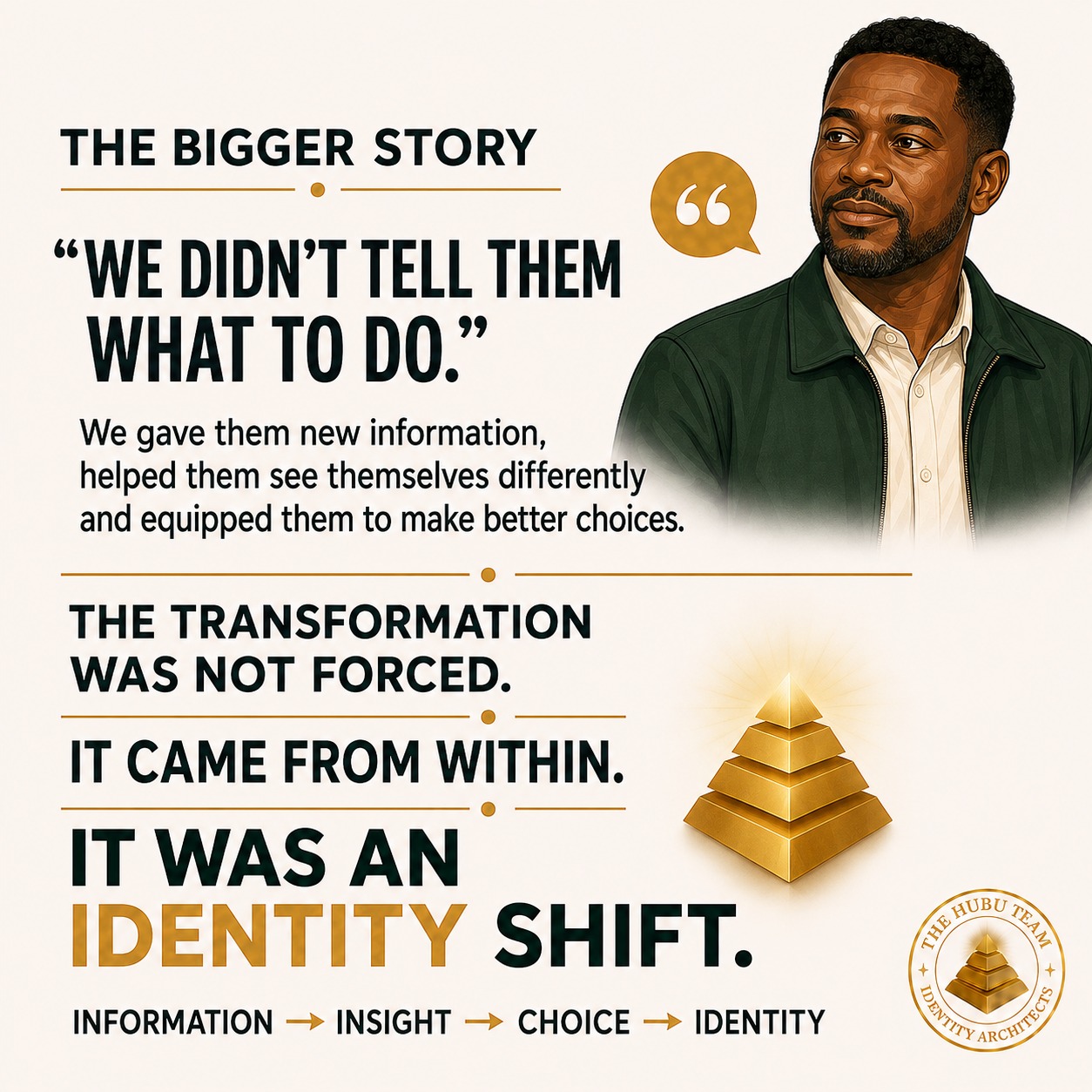
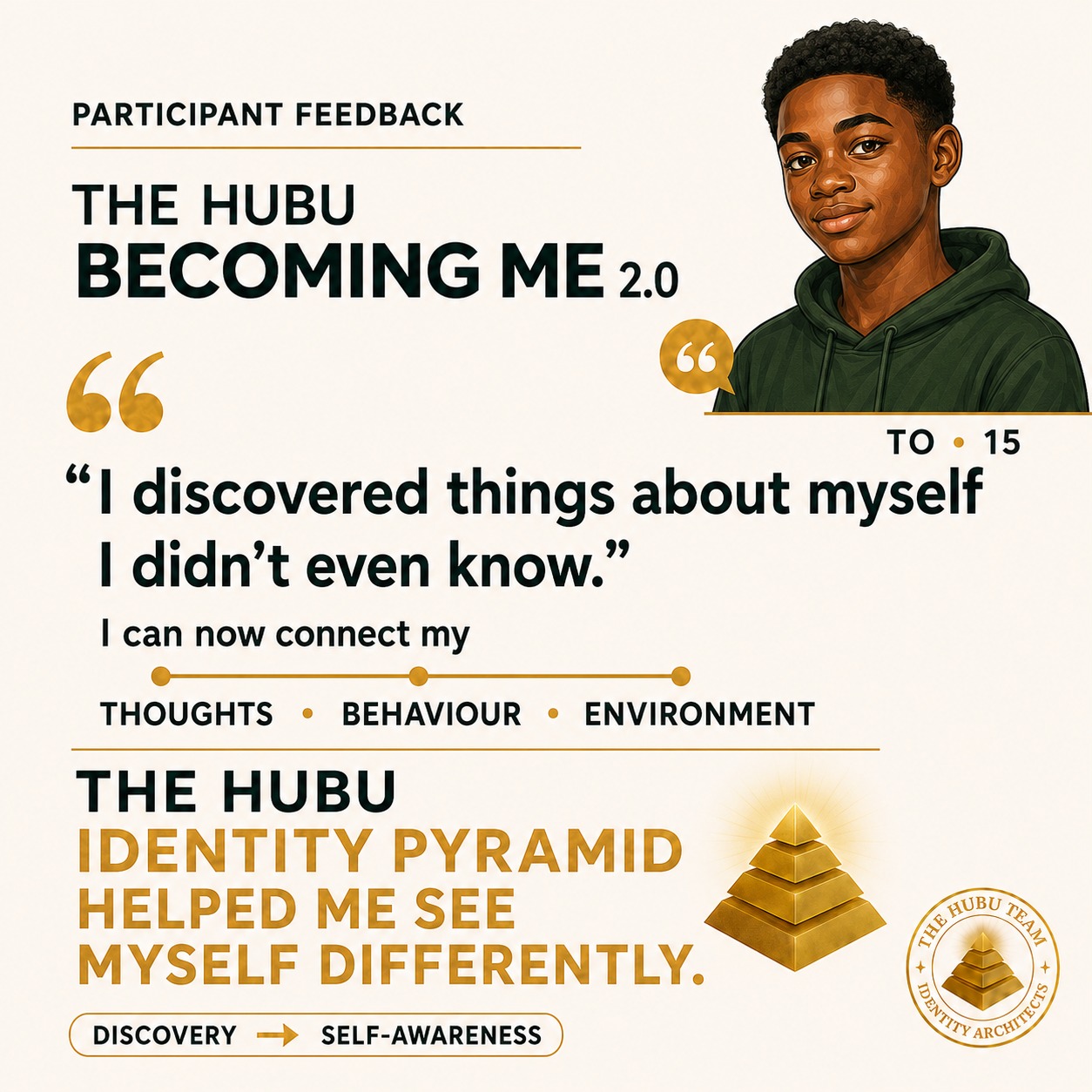
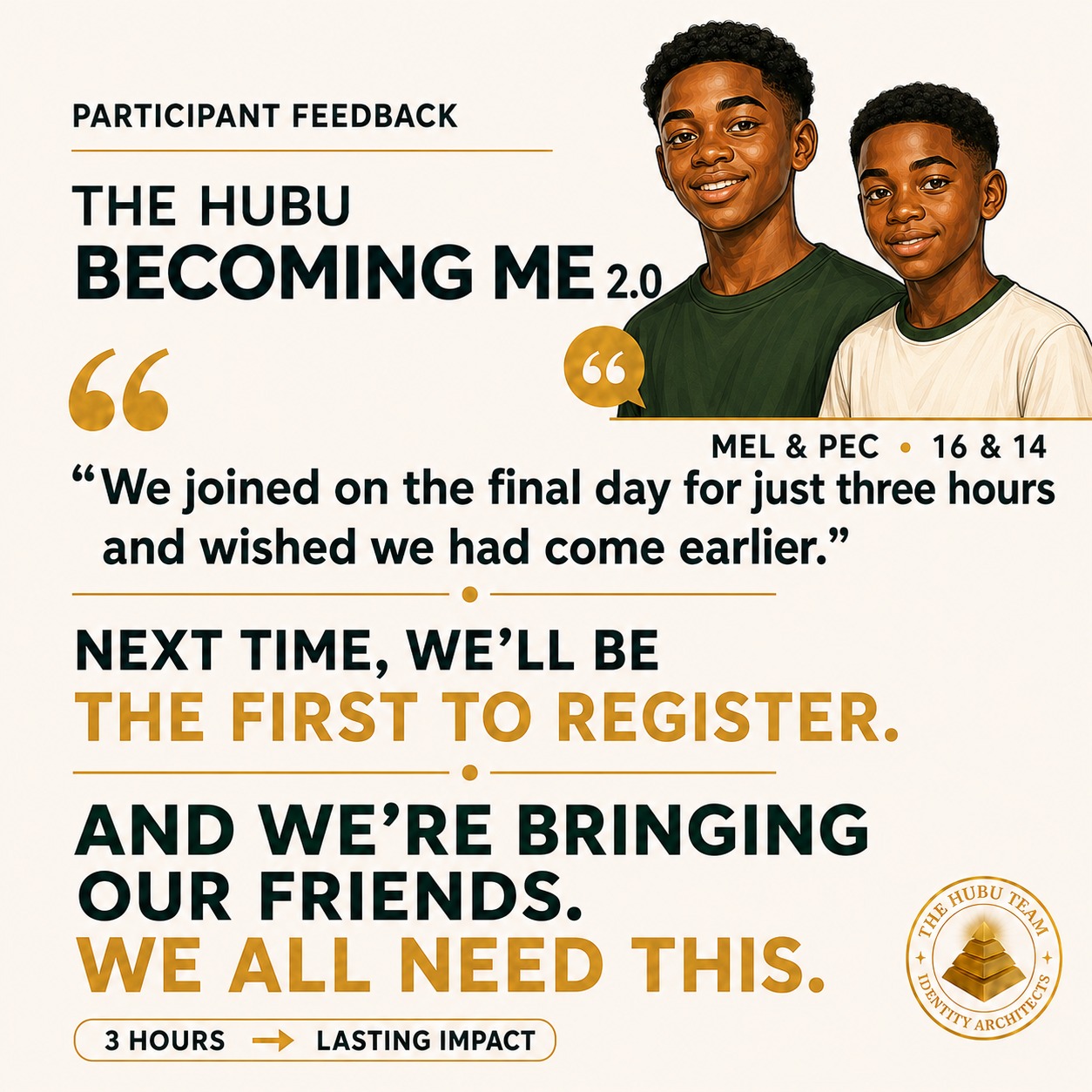
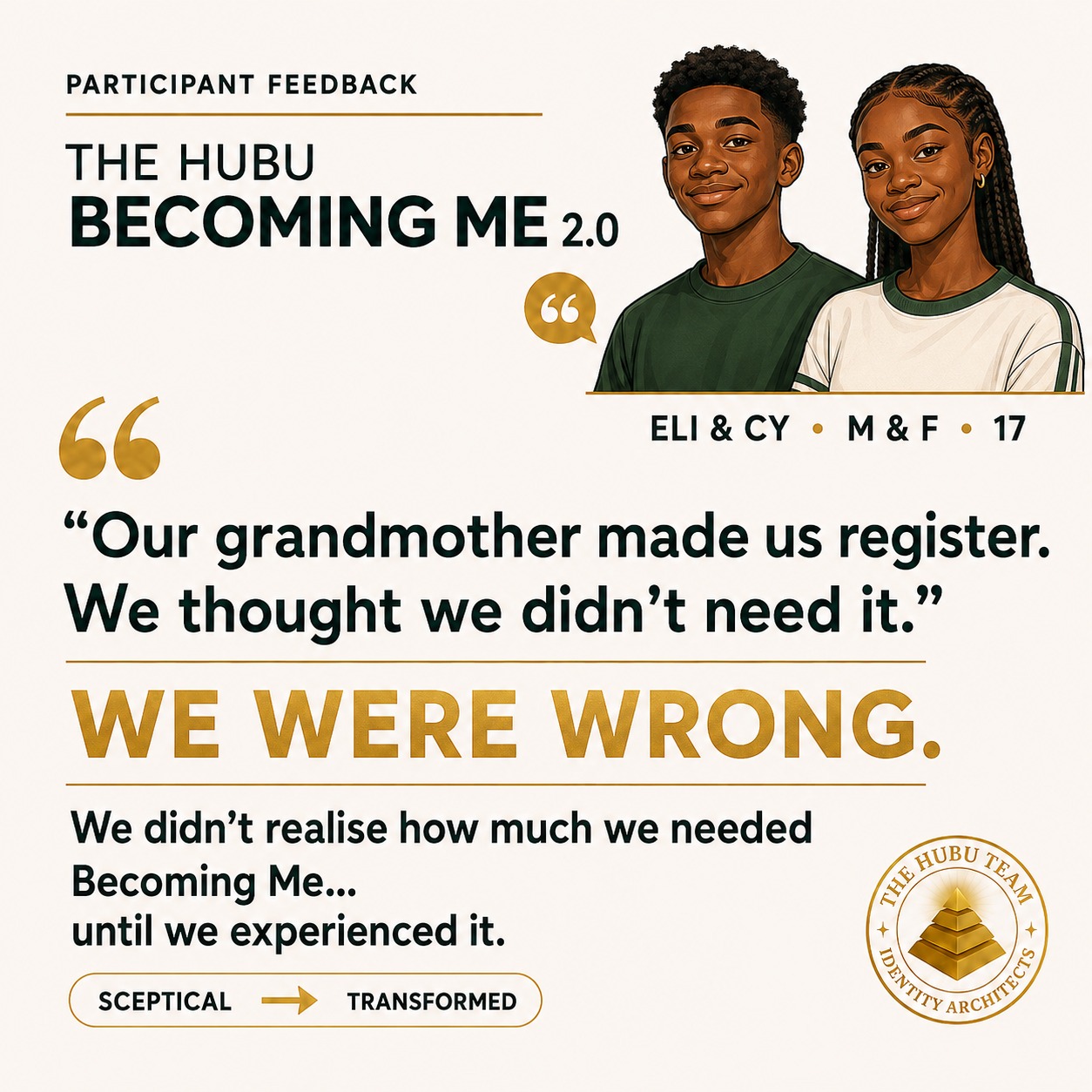
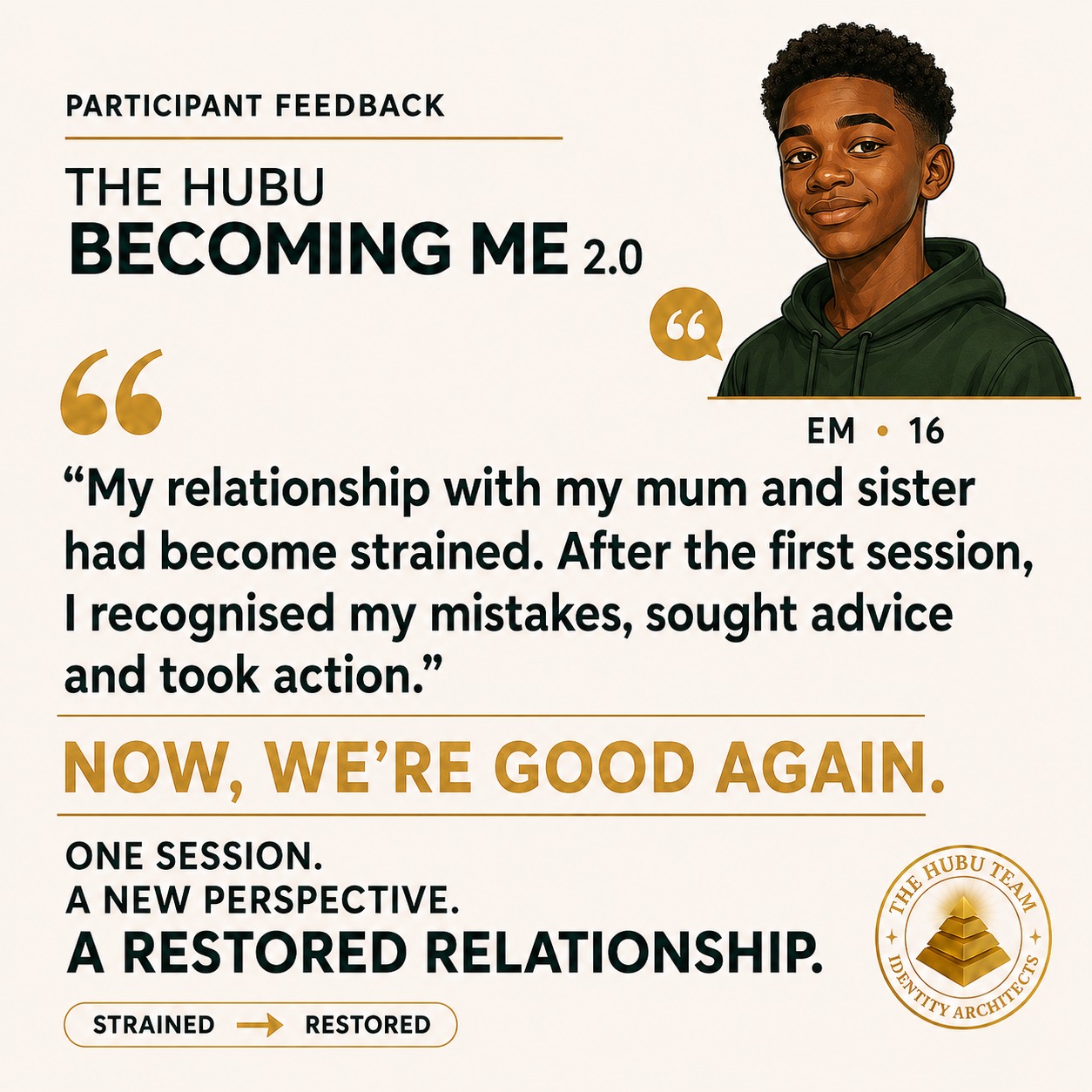
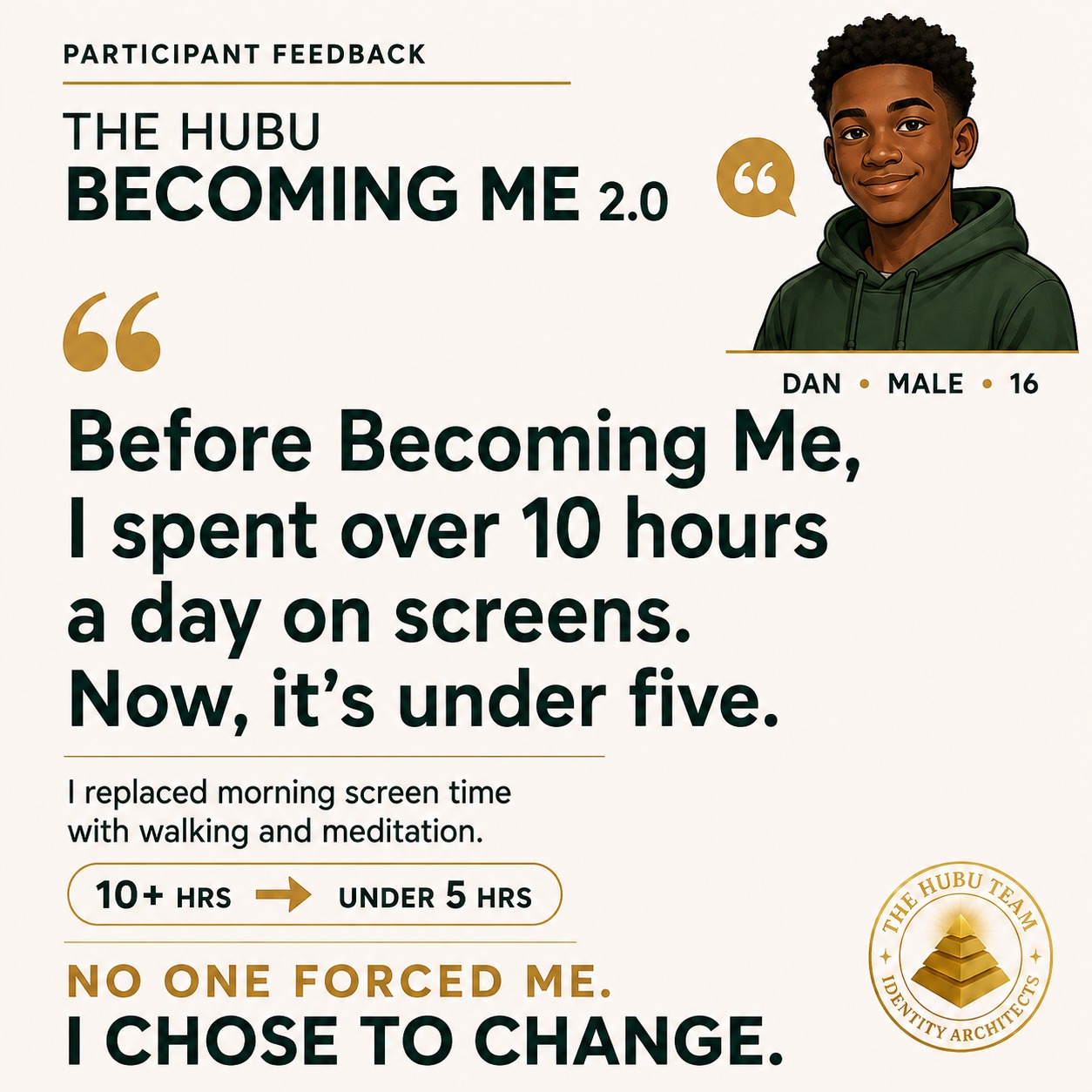
    Becoming Me 2.0 · Participant feedback

    In Their Own Words

    What teenagers and parents said after the Becoming Me workshop.

    03

    Choose the Report That Works for You

    Two Options. One Goal: Intentional Personal Growth.

    Option 1

    Executive Summary

    ₦7,500 | 3 Pages

    A concise, personalised overview of your teenager’s Identity & Mindset Assessment.

    • Five-domain assessment scorecard.
    • Key strengths and developmental insights.
    • Priority areas for reflection and growth.
    • Personalised practical recommendations.
    • A simple 30-day growth plan.

    Ideal for parents who want a clear, accessible starting point for understanding and supporting their teenager.

    Not sure which to choose? Both reports offer meaningful developmental insights. The Executive Summary provides a concise overview; the Full Report offers greater depth and more extensive guidance. Compare sample reports →

    04

    Why Parents Value the HUBU Report

    You Know Your Teenager. But Have You Heard How They See Themselves?

    Understand Beyond Behaviour

    Explore the beliefs, values and self-perceptions that may influence your teenager’s everyday decisions.

    Recognise Strengths and Growth Opportunities

    Help your teenager discover qualities worth nurturing and areas they may wish to develop.

    Encourage Personal Responsibility

    Support more intentional thinking about choices, habits and consequences.

    Build Meaningful Conversations

    Move beyond correcting behaviour or monitoring grades towards listening, guiding and coaching.

    Support Growth With Intention

    Translate self-awareness into practical reflection and positive everyday habits.

    It is not about finding fault with your teenager. It is about understanding them better.

    Free guide for parents

    Understanding the HUBU Identity & Mindset Report

    A short guide to help you read your teenager’s report, make sense of the five dimensions, and use the insights to support meaningful conversations and intentional growth.

    PDF · 11 pages · 0.5 MB

    Download the guide

    05

    From Assessment to Intentional Growth

    How It Works

    1. 1
      Choose Your Report

      Select the three-page Executive Summary or the Full Identity & Mindset Report.

    2. 2
      Register and Complete the Assessment

      Your teenager completes the structured HUBU Identity & Mindset questionnaire.

    3. 3
      Receive Personalised Insights

      Receive the selected report, based on your teenager’s responses.

    4. 4
      Reflect and Take Action

      Use the insights and recommendations to encourage supportive conversations and intentional growth.

    Assessment instructions and expected delivery arrangements will be communicated before purchase is finalised.

    Want to go deeper?

    Discover Becoming Me.

    The Becoming Me 4-Day Intensive Workshop is HUBU’s recommended complementary learning experience. Through guided reflection, teaching and practical activities, teenagers explore identity, beliefs, values, character and habits in greater depth.

    The workshop is optional and is not required to purchase or benefit from either report.

    Explore Becoming Me

    06

    Important Information

    A Tool for Reflection, Not a Label.

    The HUBU Identity & Mindset Report is a non-clinical personal-development resource, not a psychological diagnosis or a definitive measure of personality, character or future potential.

    Results reflect a teenager’s self-reported responses and should be used to encourage understanding, not comparison, punishment or judgement.

    Participation, consent, privacy and report sharing must follow appropriate arrangements for young people.

    Every teenager deserves to be understood, respected and supported as they grow.

    Read about privacy & confidentiality →

    Give Your Teenager More Than an Academic Advantage

    Help them understand who they are—and become intentional about who they want to become.

    Your teenager is already becoming someone. The question is whether they have the opportunity to understand what is shaping them and make more intentional choices about their future.

    Start with understanding. Continue with intentional growth.

    View sample reports →

    The HUBU Team | For Schools

    Developing the Student Beyond the Classroom

    Helping schools understand the young person behind the student.

    Academic assessment tells schools how students are performing. The HUBU Identity & Mindset Report helps them explore who their students are becoming.

    Great education develops more than academic ability. It helps young people understand who they are, what they believe, what they value and how their choices and habits shape their future.

    Parents increasingly want schools that nurture not only academic excellence but also self-awareness, character, personal responsibility and the confidence to navigate life beyond the classroom.

    The HUBU Identity & Mindset Report gives schools a structured, personalised approach to exploring these important aspects of student development—supporting more informed mentoring, meaningful parent engagement and intentional personal growth.

    Because education should develop both the student and the person.

    Request a school proposal

    Student Self-AwarenessDevelopmental GuidanceParent Engagement

    Already have a school code? Start the assessment with your code →

    01

    Beyond Grades: Understanding the Whole Student

    Good grades reveal academic achievement. They do not tell the whole story of the student.

    Behind every academic result is a young person developing beliefs, values, character, habits and a sense of identity. Family, friendships, social media, school culture and personal experiences influence how teenagers see themselves, relate to others and make decisions. Yet many of these developmental influences are difficult to explore through academic assessments alone.

    The HUBU Identity & Mindset Report helps schools look beyond performance to better understand the person behind it. Through structured self-reflection and personalised developmental insights, schools can encourage students to understand themselves, recognise their strengths, examine their choices and take greater ownership of who they are becoming.

    The report complements academic assessment, mentoring and pastoral care. It does not replace them.

    The goal is not simply to develop better-performing students, but to help students become more self-aware, responsible and intentional individuals.

    02

    Five Dimensions of Student Development

    Five important questions. One more intentional journey of growth.

    1. 01
      Identity Clarity Who am I?

      Understanding personal identity, individuality, strengths and the qualities that make each student unique.

    2. 02
      Belief Alignment What do I believe?

      Recognising the beliefs and assumptions that influence attitudes, confidence, decisions and responses to life.

    3. 03
      Values Orientation What matters to me?

      Identifying personal values and understanding how they guide priorities, relationships and everyday choices.

    4. 04
      Character Expression How do I show up?

      Reflecting on how beliefs and values are expressed through conduct, responsibility and interactions with others.

    5. 05
      Habits & Virtue Strength Who am I becoming through my actions?

      Examining the everyday habits, behaviours and practices that shape personal growth over time.

    Every student has a story beyond their scores.

    Each participating student receives a personalised report presenting their assessment profile, areas for reflection and practical growth recommendations. The report is intended to encourage discovery, not judgement; understanding, not labelling; and development, not comparison.

    The value is not in the score alone, but in the awareness, conversations and growth it can support.

    View a sample student report →

    03

    Five Ways HUBU Adds Value to Schools

    01

    Strengthens Guidance & Counselling

    From responding to problems to better understanding the student.

    The report gives Guidance & Counselling departments an additional structured resource for exploring identity, beliefs, values, personal responsibility and habits. It can help counsellors personalise mentoring conversations, recognise themes that deserve attention and encourage students to reflect more deeply on their choices. By complementing academic records and teacher observations with students’ own reflections, schools gain another perspective on student development.

    02

    Encourages Developmental Discipline, Not Just Punishment

    Discipline should correct behaviour while also helping students understand and change it.

    Effective discipline involves accountability and appropriate consequences. It can also create opportunities for reflection, learning and personal growth. The HUBU approach encourages an additional question:

    “What beliefs, values, choices or habits may be influencing this behaviour, and how can we help the student make better decisions?”

    The framework can support reflective discussions, responsibility, restorative approaches and constructive growth planning. It does not replace school disciplinary policies or justify using assessment scores to determine sanctions. The objective is not simply to correct what a student has done, but to help them reflect on the person they are becoming.

    03

    Reveals More Than Academic Performance

    Every student is more than a result, a grade or a behavioural record.

    Two students with similar academic performance may have very different levels of self-understanding, confidence in expressing their values or approaches to everyday decisions. The report provides an additional self-reported perspective on these aspects of personal development. This can help schools recognise individual strengths, explore developmental needs and encourage more personalised support. It is not intended to establish a definitive judgement about any student’s personality or potential.

    04

    Encourages Greater Parent Involvement

    Personal development is most effective when young people are supported both at home and at school.

    The HUBU Report gives parents a constructive starting point for conversations about identity, values, character, relationships and habits. Instead of focusing conversations exclusively on examination results or misconduct, parents can explore questions such as:

    • What strengths is my child beginning to recognise?
    • What values matter to them?
    • How can I support more responsible choices and positive habits?

    With appropriate consent and confidentiality, the report can encourage more intentional collaboration between parents, students and schools. The goal is to help parents become more engaged partners in their children’s personal development.

    05

    Demonstrates Commitment to Holistic Education

    Schools should be recognised not only for what their students achieve, but also for how they support who those students are becoming.

    By incorporating structured identity and mindset development into existing educational practices, schools can demonstrate a broader commitment to student wellbeing, character formation and personal responsibility. The report creates opportunities for intentional student-development conversations alongside academic learning. For schools, this offers a meaningful way to strengthen their holistic education proposition and distinguish their educational approach.

    04

    What Does Each Student Receive?

    A Personalised Report. Meaningful Insights. Practical Next Steps.

    The HUBU Identity & Mindset Report is designed to make developmental reflection accessible to teenagers and useful to the adults supporting them. Each personalised report presents:

    A Five-Domain Assessment Profile

    An overview of the student’s self-reported scores across Identity Clarity, Belief Alignment, Values Orientation, Character Expression and Habits & Virtue Strength.

    A Personalised Developmental Interpretation

    An explanation of areas of relative strength and potential growth, presented without labelling or making definitive psychological judgements.

    Practical Growth Recommendations

    Age-appropriate reflection exercises, habits and activities relevant to the student’s assessment profile.

    A Starting Point for Meaningful Conversations

    Questions and recommendations that can support further reflection with parents, guardians, mentors and school counsellors, subject to appropriate consent and confidentiality.

    The report is not simply something students receive. It is intended to be something they can reflect upon and use to support intentional personal growth.

    05

    From Assessment to Intentional Development

    Understanding is the beginning. Growth requires intentional action.

    Schools may use the HUBU Report as a standalone developmental assessment or incorporate it into a broader student-development programme.

    1. 1
      Assess

      Students complete the HUBU Identity & Mindset Assessment and receive their personalised reports.

    2. 2
      Understand

      Students explore their profiles, reflect on their strengths and consider areas they would like to develop.

    3. 3
      Develop

      Schools and families can support appropriate reflection, mentoring, goal-setting and values-led activities. Optional HUBU workshops may provide additional structured learning.

    4. 4
      Reflect Again

      Students revisit what they have learned, consider their experiences and identify meaningful examples of growth.

    Recommended

    Becoming Me — 4-Day Intensive Workshop

    Beyond knowing your assessment profile is understanding how to use it. The HUBU Team recommends that students experience the Becoming Me 4-Day Intensive Workshop at least once during their secondary-school years.

    Through guided teaching, reflection, discussion and practical activities, participants explore the relationship between identity, beliefs, values, character, habits and everyday choices. While the assessment encourages students to reflect on where they are, the workshop helps them think more intentionally about where they want to go.

    The workshop is recommended, not compulsory. Schools may purchase the assessment independently.

    Enquire about Becoming Me

    06

    A Developmental Journey Through Secondary School

    Supporting growth at different stages of adolescence.

    The HUBU Identity & Mindset Assessment is designed for secondary-school students. The standard approach is one full assessment per academic year, allowing students to revisit their self-understanding as they mature and gain new experiences. Schools may also request a supplementary developmental reflection at the point of graduation.

    Optional — SS3 Graduation Identity & Mindset Summary

    A graduation-focused summary that encourages students to reflect on their personal development, evolving values, character, habits and aspirations as they prepare for life beyond secondary school.

    Any graduation summary, comparative reporting or additional assessment activity will be subject to an agreed implementation scope.

    Our focus is not simply whether scores have changed, but whether students can recognise and describe meaningful growth in their awareness, choices and actions.

    07

    School Assessment Pricing

    Flexible options for schools of different sizes.

    Number of reportsPrice per report
    Individual report₦12,500
    2–99 reportsPricing confirmed on enquiry
    100–399 reports₦10,000
    400–799 reports₦7,500
    800+ reportsRequest a quotation

    What the price covers

    The published prices cover the HUBU Identity & Mindset Assessment and personalised student reports. Workshops, facilitation, institutional briefings, bespoke reporting, graduation summaries and other additional services are scoped and quoted separately.

    Schools may discuss centralised institutional payment or other suitable purchasing arrangements when requesting a proposal. Final quotations will confirm quantities, deliverables, delivery arrangements, payment terms and applicable taxes.

    Considering an initial rollout?

    Schools that wish to explore the assessment before a larger implementation may enquire about a limited school pilot. The scope, participating students, pricing and feedback process will be agreed before commencement.

    Request a school proposal

    08

    How It Works

    Simple to discuss. Structured to implement.

    1. 01
      Discuss Your School’s Needs

      We begin by understanding your student population, institutional priorities, guidance structure and developmental objectives.

    2. 02
      Agree on the Right Package

      We confirm assessment volumes, pricing, report delivery and any optional workshops or additional services.

    3. 03
      Prepare for Responsible Implementation

      We agree on student eligibility, registration, appropriate parental consent, student participation, confidentiality, data access and safeguarding arrangements.

    4. 04
      Conduct the Assessment

      Eligible participating students complete the assessment through the agreed administration process.

    5. 05
      Deliver Reports and Support Development

      Personalised reports are provided through the agreed access and delivery arrangements. Schools may then incorporate suitable reflections and developmental activities into their mentoring or pastoral programmes.

    Implementation requirements and delivery schedules are confirmed with each school.

    09

    Responsible Assessment. Respectful Development.

    Every young person deserves to be understood without being labelled.

    • The HUBU Identity & Mindset Report is a non-clinical personal-development assessment based on students’ self-reported responses.
    • It is not a psychological diagnosis, a validated personality measure or a definitive prediction of future character or success.
    • Assessment results should not be used to rank, shame, stigmatise or punish students, or to make high-stakes academic or disciplinary decisions.
    • Individual student information must be handled with appropriate consent, confidentiality, privacy safeguards and clearly defined access permissions.
    • Where aggregated developmental insights are separately agreed, reporting must protect individual student privacy and avoid unsupported conclusions.
    • The assessment complements existing school guidance, counselling and safeguarding arrangements; it does not replace professional judgement or appropriate intervention.

    HUBU believes that assessment should open conversations, preserve dignity, encourage autonomy and support intentional growth.

    10

    Frequently Asked Questions

    Who is the assessment designed for?

    The standard HUBU Identity & Mindset Assessment is intended for secondary-school students, with age-appropriate interpretation and developmental recommendations.

    How often should students take the assessment?

    The proposed standard is once per academic year. An optional SS3 graduation summary may also be arranged.

    Can the assessment replace Guidance & Counselling?

    No. It provides an additional resource for reflection and developmental conversations. It does not replace qualified counselling, safeguarding procedures or school pastoral responsibilities.

    Are workshops compulsory?

    No. Schools can purchase the assessment independently. The Becoming Me workshop is a recommended optional development experience.

    Can schools access individual student reports?

    Access arrangements will be defined in advance, subject to appropriate consent, confidentiality safeguards and agreed permissions.

    Can the assessment be used to discipline students?

    Assessment scores must not be used to impose punishments or label students. The framework may, however, inform constructive, voluntary developmental conversations alongside existing school policies.

    Can schools begin with a smaller number of students?

    Yes. Schools may enquire about a smaller initial rollout or pilot, with the scope and quotation agreed before implementation.

    Give Your Students More Than an Academic Education

    Help them understand who they are—and become more intentional about who they are becoming.

    Every school measures academic achievement. Schools committed to holistic education also create opportunities for students to discover their strengths, examine their beliefs, understand their values, take responsibility for their choices and develop positive habits.

    The HUBU Identity & Mindset Report offers a structured way to begin these conversations and connect them with practical developmental support. Whether your school is considering an initial assessment, an institution-wide programme or the Becoming Me Intensive Workshop, The HUBU Team welcomes the opportunity to explore a suitable approach.

    Distinguish your school not only by what its students achieve, but also by its commitment to the people they are becoming.

    Request a school proposal

    Identity precedes behaviour. Behaviour shapes culture. Culture influences destiny.

    Frequently Asked Questions

    Everything You Need to Know About the HUBU Identity & Mindset Report

    1. What is the HUBU Identity & Mindset Report?

    It is a personalised developmental assessment that helps teenagers understand themselves, recognise their strengths and explore how their beliefs, values, character and habits influence who they are becoming.

    2. Why does my teenager need this assessment?

    Academic results show how teenagers perform in school, but not everything about how they understand themselves or make decisions. The HUBU Report provides additional insights to support self-awareness, personal responsibility and intentional growth.

    3. What does the assessment measure?

    It explores five dimensions: Identity Clarity, Belief Alignment, Values Orientation, Character Expression, and Habits & Virtue Strength. Together, these offer a structured perspective on a teenager’s self-reported development.

    4. What is the difference between the ₦7,500 and ₦12,500 reports?

    The ₦7,500 Executive Summary is a concise, three-page report covering assessment scores, key insights, growth priorities and practical recommendations.

    The ₦12,500 Full Report provides more detailed interpretations, reflection exercises, personalised recommendations and guidance for continued development.

    5. Which report should I choose?

    Choose the Executive Summary for a quick, practical overview. Choose the Full Report for deeper insights and more comprehensive developmental guidance. Both are designed to encourage meaningful reflection and personal growth.

    6. What age group is the assessment designed for?

    The assessment is designed primarily for teenagers, particularly secondary-school students. Specific age eligibility and participation requirements are confirmed during registration.

    7. How does my teenager complete the assessment?

    After registration, your teenager completes a structured questionnaire about identity, beliefs, values, character and habits. Their responses are then used to prepare the selected personalised report.

    8. How long does the assessment take, and when will I receive the report?

    Assessment instructions, expected completion time and report delivery arrangements will be communicated before registration or payment is finalised.

    9. Is this a personality test or psychological assessment?

    No. It is a non-clinical personal-development assessment designed to encourage reflection. It does not diagnose psychological conditions, assign permanent personality labels or predict future behaviour.

    10. What if my teenager scores low in a particular area?

    A lower score is not a judgement of ability, character or personal worth. It highlights an area worth exploring through supportive conversations, reflection and practical developmental activities.

    11. Can assessment results change over time?

    Yes. Teenagers develop through new experiences, learning and reflection. Their responses may change over time, although score changes alone do not necessarily demonstrate personal growth.

    12. Will the report tell me something I don’t already know about my teenager?

    It may reveal perspectives, beliefs or self-perceptions that have not emerged in everyday conversations. Its greatest value is helping parents ask better questions and understand their teenagers more deeply.

    13. How can parents use the report?

    Parents can use the insights and recommendations to encourage meaningful conversations, recognise strengths and support positive habits. The emphasis is on listening, guiding and coaching—not judging or criticising.

    Download the parents’ guide to understanding the report (PDF) ↓

    14. Are my teenager’s responses and personal information confidential?

    Assessment information should be handled through appropriate consent, privacy and safeguarding arrangements. Parents and teenagers will be informed about how information is used, stored and shared before participation.

    15. How important is the Becoming Me 4-Day Intensive Workshop?

    The Becoming Me 4-Day Intensive Workshop is highly recommended as a foundational experience for understanding the HUBU Identity & Mindset framework.

    Through guided learning and practical activities, teenagers explore identity, beliefs, values, character and habits. Each participant receives a workbook for journaling personal reflections, exploring their current state and identifying opportunities for growth.

    Teenagers are encouraged to discuss reflections they feel comfortable sharing with parents, guardians or mentors, helping adults better understand and support their development.

    The workshop enriches their understanding of the Identity & Mindset Report and helps them apply its insights to everyday life. Classes take place during school holidays. Information about the next workshop will be published on the HUBU website.

    Explore Becoming Me →

    16. Who is The HUBU Team, what do they do, and what does HUBU mean?

    HUBU means “Helping You Be You.”

    The HUBU Team — Identity Architects is a personal-development organisation dedicated to helping individuals discover who they are, understand what shapes them and become more intentional about who they are becoming.

    Through identity assessments, coaching, workshops and developmental programmes, we work with teenagers, parents, schools and organisations to strengthen self-awareness, values, character, personal responsibility and intentional growth.

    Our philosophy is simple: You cannot intentionally become who you want to be without first understanding who you are and what is shaping you.
    Ready to Understand Your Teenager Better?

    Give your teenager the opportunity to discover who they are and become more intentional about who they want to become.

    3-Page Executive Summary — ₦7,500  |  Full Personalised Report — ₦12,500

    Sample reports

    Compare the two reports

    Both samples use the same fictional profile, so you can see how much each report covers.

    Option 1 · ₦7,500

    Executive Summary

    Three pages: the five domain scores with the insight worth exploring, the HUBU Identity Pyramid, and a 30-day plan for intentional action.

    Option 2 · ₦12,500

    Full Identity & Mindset Report

    Eleven pages: detailed interpretation of all five dimensions, the Identity Pyramid, reflection exercises, a 30-day growth plan and guidance for parents and mentors.

    About the Founder

    Femi Ogunleye

    Founder, The HUBU Team  |  Identity Architect

    Femi Ogunleye is the founder of The HUBU Team (Helping You Be You), an identity development and expression platform dedicated to helping individuals, teams and organisations understand who they are and how their identity shapes their thinking, decisions, behaviour and outcomes.

    A Chartered Stockbroker, he brings extensive professional experience across investment management, business advisory, strategic human resource transformation and organisational development. He has worked with business leaders, senior executives and institutions on leadership development and organisational effectiveness.

    Understanding who we are is essential to understanding why we think, behave and make decisions the way we do.

    The belief at the heart of Femi’s work

    Why identity development starts early

    He recognises that many beliefs, perceptions and behavioural patterns that influence adult life have their roots in childhood. This makes early identity development essential. Children need more than academic knowledge; they need self-awareness, sound values, strong character and the confidence to make responsible decisions.

    Through engagements with schools and the Becoming Me workshops, he has helped teenagers and parents develop greater awareness of the importance of identity development and the need for more intentional mentoring, guidance and preparation of children for life.

    His work seeks to make often overlooked aspects of human and organisational development more visible, giving individuals, parents, educators and business leaders a better foundation for understanding people and supporting their growth.

    The HUBU Team

    Helping people understand who they are, recognise who they can become, and live it out intentionally.

    Start With Understanding

    The HUBU Identity & Mindset Report helps teenagers explore who they are and become intentional about who they want to become.

    Feedback

    Tell us what you think

    Whether you are a parent, teacher or teen, we would love to hear about your experience of the HUBU Identity & Mindset Report: what helped, what was unclear and what we could do better.

    I am a…

    Register

    Before you begin

    Choose your report

    There are no “good” or “bad” answers. Choose what fits your experience most of the time, rather than what you think you should say. If a statement is unclear, you can leave it blank rather than guess.

    Privacy: the email address is used only to deliver the report. If you are doing this with a school or group, ask your facilitator who will see the report and what happens if you share a safety concern.

    Statement 1 of 25 Tip: press 1–5 to answer